
- Published on
Edge AI in the Field: Automating Biological Sampling Systems
- Authors

- Name
- Jim Fellows
- hi@jimfellows.dev
The Mission: Automated Image Capture of Fish Specimens
The NOAA Southern California Hook & Line Survey plays a critical role in fisheries stock assessment along the West Coast. Every year, the survey samples approximately 210 fixed site locations and catches on average 15,000 individual fish that are sampled for biological measurements.
The team uses a pretty slick software setup that automates much of the data collection via multiple apps that communicate over a local network spun up on the research vessel. With a pretty efficient workflow already, we were faced with a question, what might take us to the next level?
I led the development of a camera system designed to integrate directly with our biological sampling workflow, providing a high-resolution "digital voucher" for every specimen measuring across the cutter station table. Part of the story here is about incremental progress, and pushing for improvements each survey.
The Evolution of a System
Year 1: The Prototype (USB)
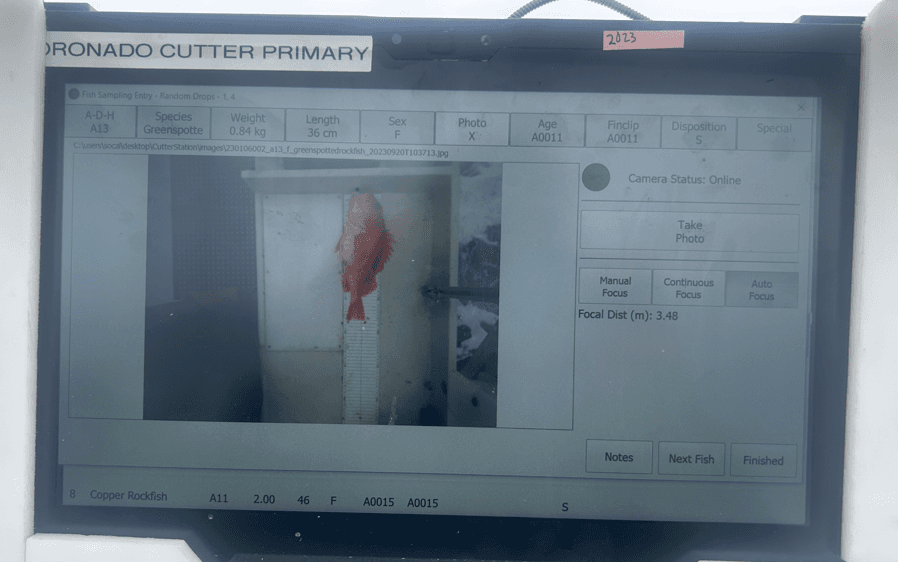
Our first attempt was simple: a Raspberry Pi camera powered directly by the tablet via USB. We used a networked static IP over the USB connection.
- Verdict: Clunky, unreliable, and hard to manage cables on a wet, moving boat processing table.
Year 2: The Networked Edge Device (POE + FastAPI)
We learned our lesson. For the second iteration, we decoupled the camera from the tablet.
** The Hardware:**
- Raspberry Pi 4: The brains, living in a waterproof enclosure.
- Camera: A 16MP Autofocus module.
- Power: Power Over Ethernet (POE) directly from the ship's switch.
The Software:
- FastAPI: The Pi runs a lightweight REST API.
- Storage Strategy: We realized transferring high-res images to the tablet in real-time caused lag. Instead, the Pi stores the full-resolution image locally and sends a lightweight thumbnail to the client for verification.
- Metadata: Every image is verified and tagged with custom EXIF data containing the biological info (Species, Length, Weight, Sex) and location data (Lat/Lon, Depth, Site ID).
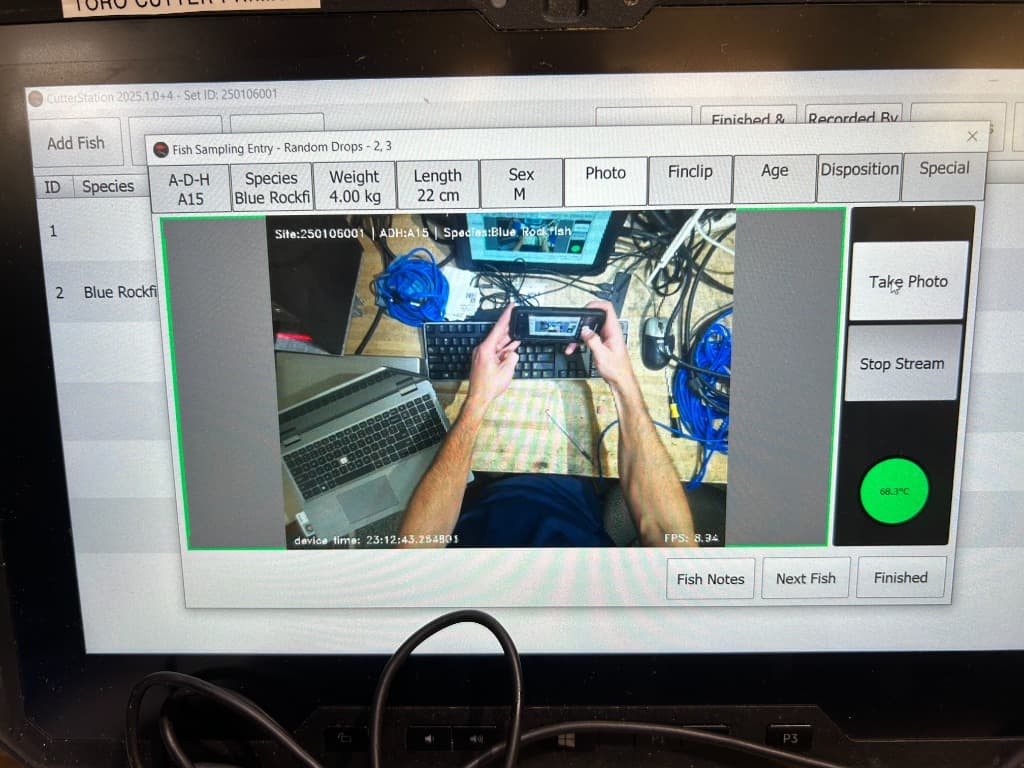
The result? Over 10,000 high-resolution images of individual rockfish specimens, linked to their biological data.
Year 3: Remote Operations
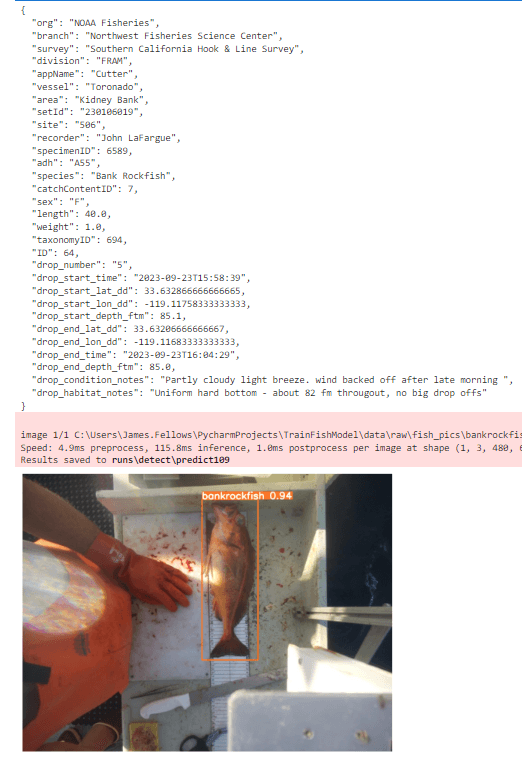
We expanded the system to allow control not just from the sampling station, but remotely from the galley. We built a Python module that lets us monitor the "backdeck" camera feeds over the vessel's network, ensuring QC without needing to be physically present on the backdeck.
The Future: AI on the Edge
We are now looking beyond just "taking pictures." The next frontier is automated capture & measurement. As of this writing (early 2026), we're in the planning phases of this year's survey in September. My hope is we can use past year's data to train a model to 1.) identify a fish and track it as a single entity 2.) automate the actual capture of the fish after detection 3.) attempt to infer an average length measurement of the indivual, and regress an estimated from this length.
Performing real-time image processing at this scale requires a significantly more powerful "brain" to control the camera and offload frame-by-frame processing. For our 2026 deployment, we are upgrading our edge compute infrastructure to an NVIDIA Jetson Orin NX to handle the intensive machine learning workloads.
We are also transitioning our imaging hardware to improve accuracy under demanding conditions. To eliminate motion artifacts and handle the harsh, variable lighting of the open ocean, we are evaluating the Lucid Vision Labs Triton camera, specifically leveraging its global shutter capabilities for crisp, distortion-free captures.
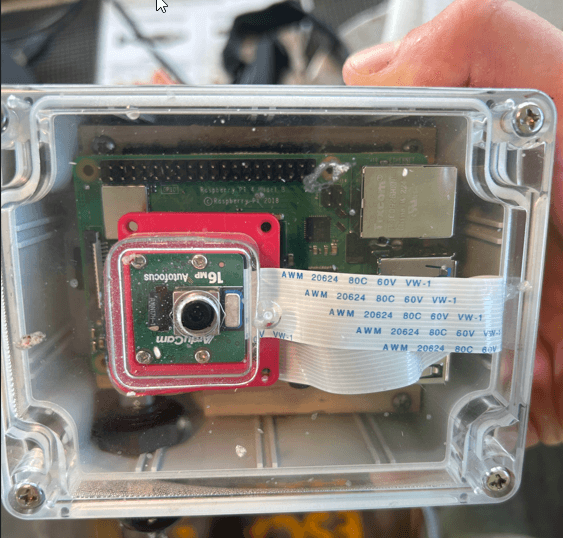
On the software front, we are actively investigating the new open-source Edge AI models recently launched by The Nature Conservancy for Electronic Monitoring (EM). Integrating these models into our edge pipeline could drastically accelerate our timeline for automated catch verification, allowing us to leverage community-driven, battle-tested computer vision models directly on our vessel hardware.
What started as a QC project has laid the groundwork for a fully automated sampling capability, potentially revolutionizing how we collect data on research and commercial vessels alike.